International

Iranians confront a post-Khamenei reality with relief, disbelief and anxiety

Iranians Confront a Post-Khamenei Era

For the first time in decades, Iranians awoke to a nation no longer led by Ayatollah Ali Khamenei, after coordinated US-Israeli strikes claimed his life, leaving the country facing a profoundly uncertain chapter.Diverse reactions unfolding nationwideThe news of Khamenei’s death has provoked a wide spectrum of reactions across Iran. In the capital and other cities, some citizens expressed cautious relief, viewing the end of his decades-long rule as a potential turning point. Celebrations erupted in certain neighborhoods, with people honking horns, waving clothes, and even toppling monuments associated with the Islamic Republic’s founders. Videos circulating online from cities such as…
Read More
What safeguards exist in modern nuclear power

What Makes Modern Nuclear Power Secure? An Overview of Safeguards

Modern nuclear power relies on a multilayered framework of technical, organizational, regulatory, and institutional protections built to avert accidents, curb their impact when they happen, guard against hostile interference, and ensure nuclear materials are not redirected for weaponization. These protective measures extend throughout the entire life span of a plant, covering site selection, system design, construction, daily operations, emergency preparedness, waste handling, and eventual decommissioning.Fundamental tenets: layered protection supported by successive physical obstaclesDefense-in-depth is the organizing principle. It implements multiple, independent lines of protection so that no single failure or human error leads to catastrophic release. Complementing this are multiple…
Read More
China reveals its plan to challenge the US dollar for dominance. Could it ever work?

Can China’s Yuan Really Rival the US Dollar? An Analysis

China is taking advantage of a period marked by global instability to advance its long-held goal of giving its currency a broader international presence, as market turmoil, a softer US dollar, and shifting political landscapes have created what Beijing views as exceptionally ripe conditions.In recent months, global markets have been unsettled by a convergence of political and economic factors, many of them tied to policy signals coming out of the United States. The renewed presidency of Donald Trump has reintroduced an element of unpredictability into trade, monetary policy, and international relations. As investors attempt to price in this uncertainty, the…
Read More
Trump’s damage is done. Democrats – and Europe – are struggling to define what’s next

Trump’s Impact: How Democrats and Europe Are Navigating What’s Next

At the Munich Security Conference, several high‑profile Democrats quietly hinted at presidential aspirations while confronting a stark warning from Europe: the transatlantic bond may never fully revert to what it once was. With global partnerships strained by resurgent nationalism and intensifying geopolitical competition, unresolved doubts about America’s future leadership cast a long shadow over the 2028 campaign.The annual gathering at the Munich Security Conference has long functioned as a testing stage for emerging statesmen, and for years American presidents and presidential hopefuls journeyed to the Bavarian capital to reaffirm Washington's dedication to Europe and to emphasize that the United States…
Read More
How cities prepare for more intense heat waves

Climate Change & Cities: Adapting to Intense Heat

Cities around the world face more frequent, longer and hotter heat waves as climate change continues to raise average temperatures and amplify extremes. Urban areas are especially vulnerable because the urban heat island effect concentrates heat: paved surfaces, dense buildings and low vegetation can raise local temperatures by 1–7°C relative to nearby rural areas. Preparing for this new normal requires a mix of near-term emergency measures, longer-term planning, infrastructure upgrades, public health interventions and community-focused equity work.The challenge: why intense heat waves are a growing urban riskHeat waves increase risks of heat illness, cardiovascular and respiratory events, and death. Notable…
Read More
How a distant conflict can raise the price of everyday goods

Geopolitical Strife: How It Inflates Your Shopping Bill

A war or political conflict thousands of miles away can raise the price of everyday goods at home through a chain of economic and logistical links. Modern supply chains are tightly interwoven, and essential inputs such as energy, metals, food, and shipping capacity are concentrated in a relatively small number of producing regions. When conflict disrupts production, trade flows, insurance, or finance in those regions, the cost of inputs rises and producers pass those costs on to consumers.Key transmission channelsCommodity supply shocks — Conflicts that disrupt the export flow of oil, gas, wheat, fertilizers, or metals cut global availability and…
Read More
Why energy keeps getting used as a geopolitical tool

Energy’s Geopolitical Leverage: A Deep Dive

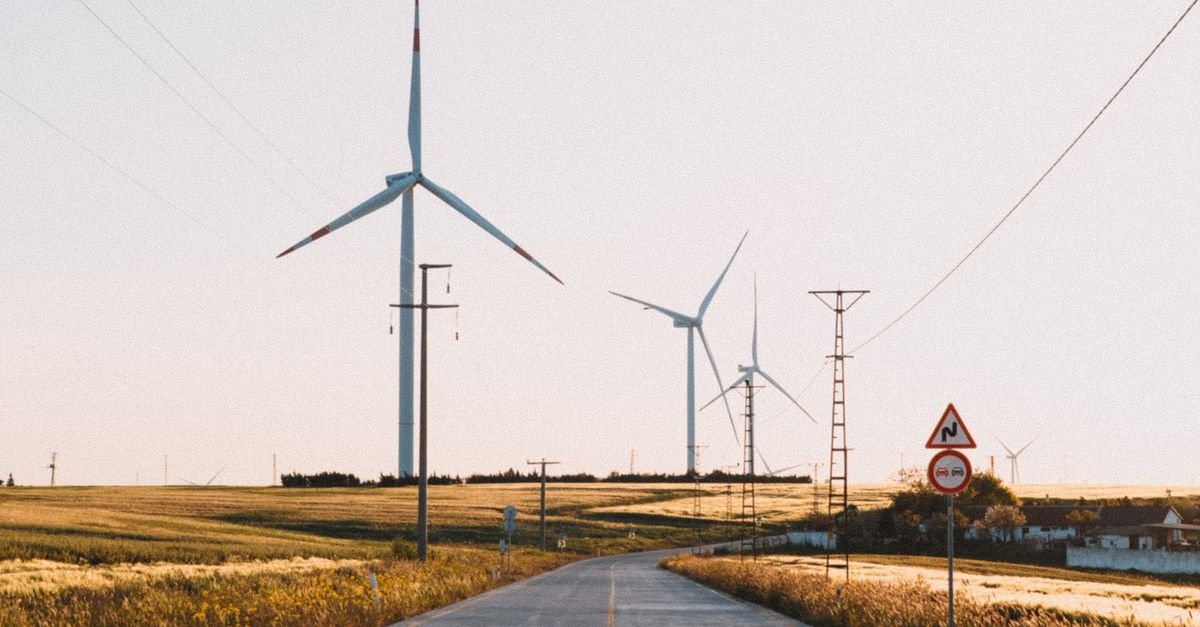
Energy is more than fuel and electricity: it underpins industry, transport, household welfare, and military capability. That centrality makes energy an unusually effective lever in international politics. States, companies, and nonstate actors use supply, price, infrastructure, regulation, and technological control to advance strategic aims. The practice persists because of four enduring features: uneven resource distribution, long-lived infrastructure and contracts, the immediacy of economic pain when supplies are constrained, and the broad knock-on effects on alliances and domestic politics.Fundamental dynamics shaping energy geopoliticsSupply manipulation: producers may restrict or reroute exports to engineer shortages or penalize partners, doing so openly through quotas…
Read More