International

Trump’s damage is done. Democrats – and Europe – are struggling to define what’s next

Trump’s Impact: How Democrats and Europe Are Navigating What’s Next

At the Munich Security Conference, several high‑profile Democrats quietly hinted at presidential aspirations while confronting a stark warning from Europe: the transatlantic bond may never fully revert to what it once was. With global partnerships strained by resurgent nationalism and intensifying geopolitical competition, unresolved doubts about America’s future leadership cast a long shadow over the 2028 campaign.The annual gathering at the Munich Security Conference has long functioned as a testing stage for emerging statesmen, and for years American presidents and presidential hopefuls journeyed to the Bavarian capital to reaffirm Washington's dedication to Europe and to emphasize that the United States…

Read More
How cities prepare for more intense heat waves

Climate Change & Cities: Adapting to Intense Heat

Cities around the world face more frequent, longer and hotter heat waves as climate change continues to raise average temperatures and amplify extremes. Urban areas are especially vulnerable because the urban heat island effect concentrates heat: paved surfaces, dense buildings and low vegetation can raise local temperatures by 1–7°C relative to nearby rural areas. Preparing for this new normal requires a mix of near-term emergency measures, longer-term planning, infrastructure upgrades, public health interventions and community-focused equity work.The challenge: why intense heat waves are a growing urban riskHeat waves increase risks of heat illness, cardiovascular and respiratory events, and death. Notable…
Read More
How a distant conflict can raise the price of everyday goods

Geopolitical Strife: How It Inflates Your Shopping Bill

A war or political conflict thousands of miles away can raise the price of everyday goods at home through a chain of economic and logistical links. Modern supply chains are tightly interwoven, and essential inputs such as energy, metals, food, and shipping capacity are concentrated in a relatively small number of producing regions. When conflict disrupts production, trade flows, insurance, or finance in those regions, the cost of inputs rises and producers pass those costs on to consumers.Key transmission channelsCommodity supply shocks — Conflicts that disrupt the export flow of oil, gas, wheat, fertilizers, or metals cut global availability and…
Read More
Why energy keeps getting used as a geopolitical tool

Energy’s Geopolitical Leverage: A Deep Dive

Energy is more than fuel and electricity: it underpins industry, transport, household welfare, and military capability. That centrality makes energy an unusually effective lever in international politics. States, companies, and nonstate actors use supply, price, infrastructure, regulation, and technological control to advance strategic aims. The practice persists because of four enduring features: uneven resource distribution, long-lived infrastructure and contracts, the immediacy of economic pain when supplies are constrained, and the broad knock-on effects on alliances and domestic politics.Fundamental dynamics shaping energy geopoliticsSupply manipulation: producers may restrict or reroute exports to engineer shortages or penalize partners, doing so openly through quotas…
Read More
The Peril of Manipulated Information on Democracy

The Peril of Manipulated Information on Democracy

Democratic stability depends on citizens who remain well-informed, institutions capable of earning public trust, a shared foundation of widely acknowledged yet continuously debated facts, and transitions of power conducted with order. Information manipulation — the deliberate shaping, distorting, amplifying, or suppressing of material to influence public attitudes or behavior — gradually erodes these foundations. It weakens them not only by spreading falsehoods, but also by reshaping incentives, corroding trust, and transforming public attention into a lever for strategic gain. This threat functions at a systemic level, producing compromised elections, polarized societies, reduced accountability, and environments in which violence and authoritarian…
Read More
Why Venezuela’s opposition leader Machado is betting her political future on Trump

Venezuela’s Opposition Leader Machado: Why Trump is Key to Her Future

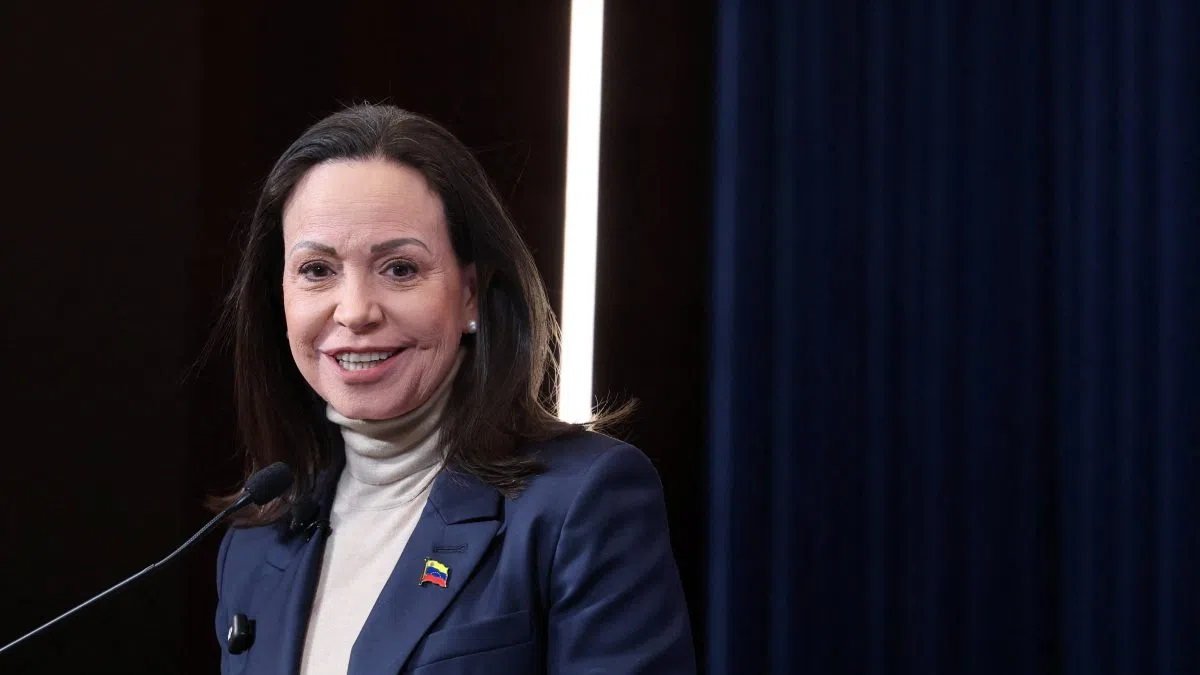
Venezuelan opposition leader and 2025 Nobel Peace Prize laureate Maria Corina Machado reaches Washington as delicate talks unfold regarding her nation’s trajectory, her trip aligning with ongoing U.S. discussions about Venezuela’s governance in the aftermath of Nicolás Maduro’s ousting.Machado’s arrival in the U.S. capital follows a volatile year in Venezuelan politics, marked by shifting power and uncertainty. Only a year earlier, she had been on the campaign trail in Caracas, working to rally citizens against Maduro as he entered a third term despite disputed election outcomes. Although her candidate, Edmundo González, was widely reported to have secured a clear victory,…
Read More
Meet the trusted diplomat tasked with turning the US-backed ceasefire into peace for Gaza

US-Backed Gaza Ceasefire: The Diplomat’s Peace Strategy

Bulgaria’s Nickolay Mladenov, a seasoned diplomat, has taken on one of the most challenging assignments of his career: overseeing the delicate implementation of a US-brokered plan to stabilize Gaza and guide its administration. His experience, relationships, and reputation will all be tested as he navigates the complex political terrain of the region.Mladenov’s path to this moment has unfolded over several decades of diplomatic work. In the early stages of his career, he assumed prominent roles within Bulgaria’s government, serving as defense minister at 37 and later taking on the position of foreign minister. His global portfolio broadened through his service…
Read More